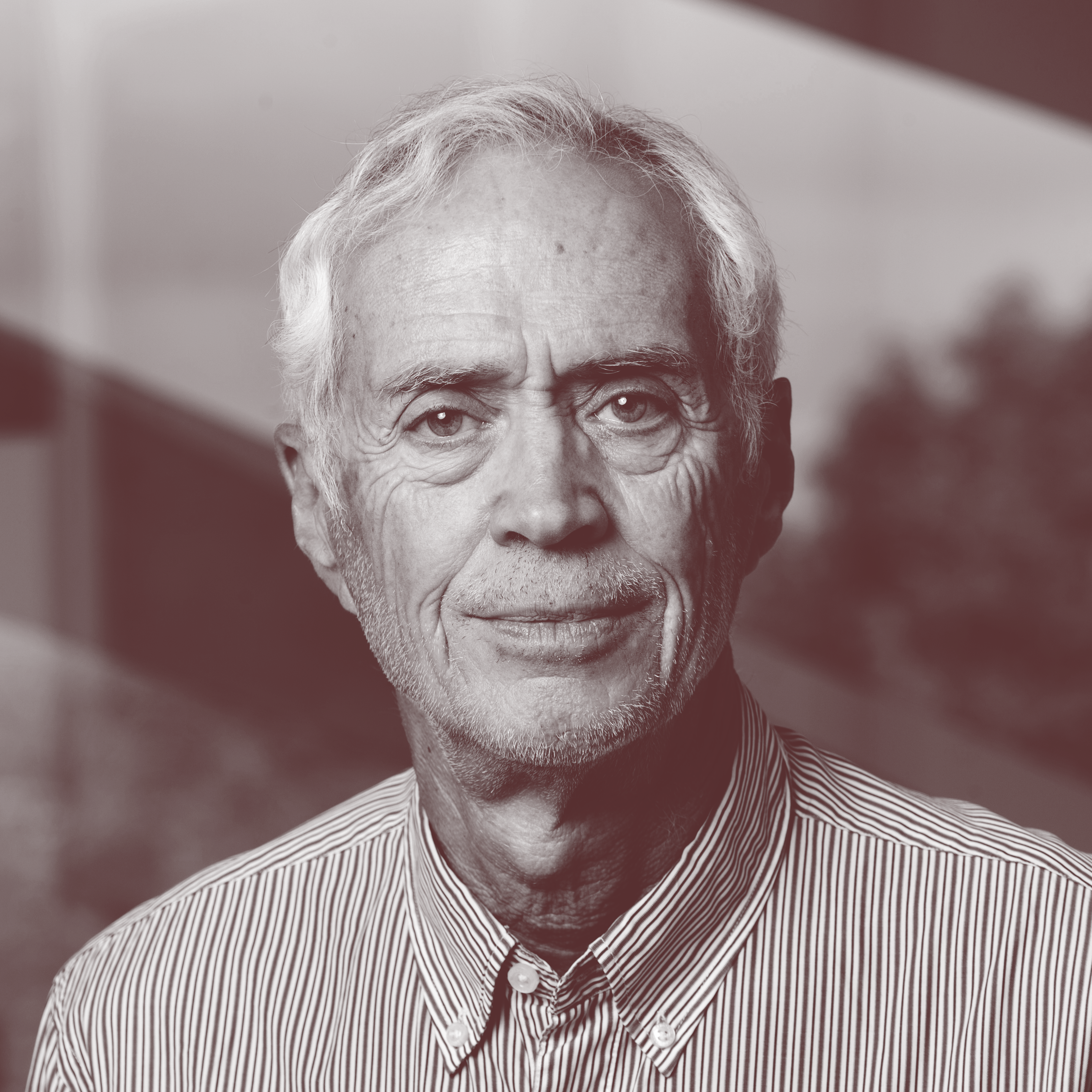
Douglas Hanahan, PhD
Ludwig Institute for Cancer Research
Swiss Institute for Experimental Cancer Research (ISREC)
Swiss Federal Institute of Technology Lausanne
Lausanne, SwitzerlandDouglas Hanahan received a bachelor’s degree in physics from MIT and a Ph.D. in biophysics from Harvard. He worked for a decade at Cold Spring Harbor Laboratory first as a Harvard graduate student and then as a faculty member. Subsequently he spent twenty-one years on the faculty at the University of California San Francisco before moving to Lausanne in 2009.
In the early 1980’s Hanahan helped pioneer the genetic engineering of mice heritably endowed to develop organ-specific cancers that mimic human carcinogenesis. His research program has centered ever since on using mouse models of human cancer to investigate mechanisms of stepwise tumor development and progression, and to design and evaluate mechanism-guided therapeutic strategies with promise to improve the treatment of human cancers.
Hanahan discovered, with the late Judah Folkman, the ‘angiogenic switch’, which is activated to produce new blood vessels that enable incipient neoplasia to progress toward malignancy. He conceptualized, with Robert Weinberg, an organizing principle that rationalizes the daunting complexity of human cancers; their landmark publication in 2000, ‘The Hallmarks of Cancer’, henceforth elaborated in a series of sequels, envisages that a set of complementary functional capabilities are acquired by most human cancers, a concept that is now widely accepted, and beginning to influence cancer therapy.
︎ L︎earn more about the speaker here
︎ Visit the speaker’s lab here
and here