
14-16 October 2026
Lisbon, Portugal

Call for abstracts will open on 27 January 2026.
Apply for oral or poster presentations.
The Champalimaud Research Symposium 2026
(CRSy26) will gather an interdisciplinary community of researchers to discuss the interplay between the neural and immune systems in relation to cancer initiation, progression and therapy. This symposium will emphasise the dynamic interactions among tumour cells, neurons and immune components, and how these relationships impact tumour growth, metastasis and the tumour microenvironment.
Key topics will include mechanistic insights into neuro-immune signaling pathways, the influence of stress and innervation on tumor immunity, and how immune responses can affect neural activity within tumours and beyond.
(CRSy26) will gather an interdisciplinary community of researchers to discuss the interplay between the neural and immune systems in relation to cancer initiation, progression and therapy. This symposium will emphasise the dynamic interactions among tumour cells, neurons and immune components, and how these relationships impact tumour growth, metastasis and the tumour microenvironment.
Key topics will include mechanistic insights into neuro-immune signaling pathways, the influence of stress and innervation on tumor immunity, and how immune responses can affect neural activity within tumours and beyond.
Symposium Chairs
Carlos Minutti
Immunoregulation Lab, Champalimaud Foundation, Lisbon, PT
Henrique Veiga-Fernandes Immunophysiology Lab, Champalimaud Foundation, Lisbon, PT
Carlos Minutti
Immunoregulation Lab, Champalimaud Foundation, Lisbon, PT
Henrique Veiga-Fernandes Immunophysiology Lab, Champalimaud Foundation, Lisbon, PT
Confirmed Keynote Speakers
Douglas Hanahan
EPFL, Lausanne, CH
Florent Ginhoux
Gustave Roussy, Villejuif, FR
Douglas Hanahan
EPFL, Lausanne, CH
Florent Ginhoux
Gustave Roussy, Villejuif, FR
CRSy is the main scientific symposium of the Champalimaud Research. Since 2017, it has fostered global dialogue among researchers across various disciplines, focusing on groundbreaking advancements in neuroscience, physiology and cancer.


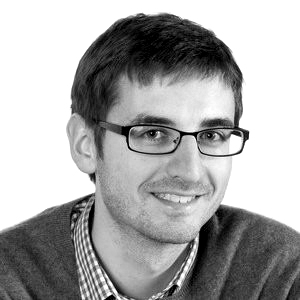
Guillaume Hennequin, PhD
Computational and Biological Learning Lab
University of Cambridge
Cambridge, United Kingdom
Guillaume Hennequin is a faculty member of the Computational and Biological Learning lab in the Department of Cambridge at the University of Cambridge, UK. His research aims to uncover the principles by which brains compute through neural network dynamics. He is interested in a broad range of computations, from perception to motor control and learning. His group also develops machine learning methodology for making sense of neural and behavioural data.
Guillaume holds an Engineering degree from Supélec (now CentraleSupélec; France), an MSc in cognitive science from the University of Edinburgh (UK), and a PhD in computational neuroscience from EPFL (Switzerland) under Wulfram Gerstner. Between 2013 and 2015, he was a postdoctoral fellow with Máté Lengyel in Cambridge.
︎ Visit the speaker’s lab here